| |
Seminar on Rights and Obligations in Labour Relation – Sessions for Employers and Employees from Different Industries
15-11-2017
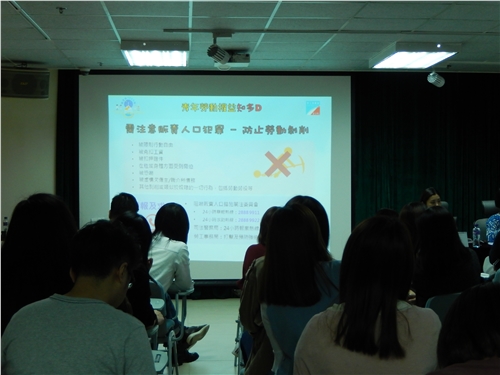
Between June and October 2017, the Labour Affairs Bureau co-organized 16 sessions of “Seminar on Rights and Obligations in Labour Relation” with the Public Security Police Force or associations from different industries (including the catering, retail service, wholesale and trading, etc.) Target audience of these seminars included employers, local and foreign employees, teenagers and young workers (14 – 29 years of age). The various sessions drew a total number of 1230 participants.
During the sessions, case studies were provided according to the nature of the related industries. Contents of the «Labour Relations Law», «Law for the Employment of Non-resident Workers» and the Law No.6/2008 «Combat the Crime of Trafficking in Persons» were introduced to the participants.
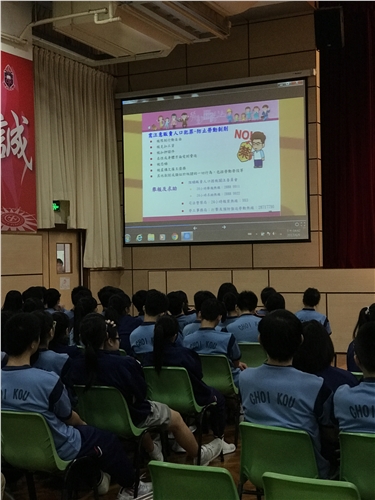
Before the beginning of the summer holiday, agents of the Labour Affairs Bureau and the Public Security Police Force visited local high schools to hold talks regarding labour rights and job seeking issues. Pamphlets of the relevant laws were distributed so as to enhance the teenagers’ understanding about employment rights and obligations as well as bringing awareness to them about forced labour.
The organizers provided Q&A sessions during the activities. After each case study, the participants and the speakers had interactive sharing so that they could have more focused exchange and thus allowing more participation from the audience.
|
|
|
|
|
|
Back> |
|